Blood, Grease, and the Man Behind the Bucket
The Brawling, Gun-Toting Perfectionist Who Built KFC
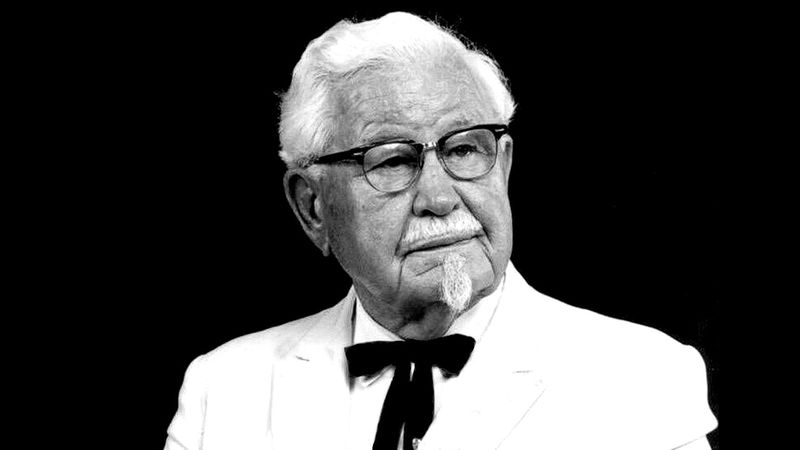

There is a particular kind of American tragedy in which the most vivid, difficult, genuinely interesting figures get slowly processed into corporate mascots. Drive past a KFC today and there he is: the white suit, the goatee, the rotating bucket, the benevolent grandfather smile. An image so thoroughly sanitised it gives Santa Claus a run for his money.
The real Harland Sanders was nothing like that. He was a deeply flawed, intermittently violent, obsessively perfectionist hustler who built a global food empire at 65, sleeping in the back of a Cadillac, fuelled by desperation, a pressure cooker, and sheer bloody-mindedness. By 2010, less than 40% of young Americans recognised him as an actual historical person. He had been so thoroughly mythologised that he'd ceased to exist — just another pliable corporate symbol, filed somewhere between Aunt Jemima and the Jolly Green Giant. That erasure matters, because the genuine article was considerably more interesting than the bucket suggests.
Indiana, Not the Deep South
Sanders wasn't born to magnolias and mint juleps. He came into the world in 1890 in Henryville, Indiana, in the kind of grinding rural poverty that leaves no room for culinary romance. His father died when he was six, and Harland — the eldest — was left to cook for his siblings while his mother worked in a canning factory. He learned to feed people because people needed feeding. That was the entirety of the motivation.
What followed was one of the more chaotic early lives in American food history. Railroad section hand. Streetcar conductor. Ferryboat entrepreneur. Tire salesman. Sanders tried nearly everything and left most of it in acrimony. He was fired from the railroad for fighting with an engineer under a water tower. His brief legal career ended when he punched his own client in open court, in front of the judge. A barber's customer reportedly had the shaving lather knocked clean off his face by a passing Sanders fist.
When his first wife Josephine finally took their daughter and went home to her parents, Sanders didn't write a contrite letter. He crouched in the bushes outside his in-laws' house and waited to snatch the child back. His knees eventually gave out. He walked inside and simply demanded his family return. Somehow, they did.
The Shootout at Hell's Half-Acre
In 1930, Sanders took over a Shell station in Corbin, Kentucky, on a stretch of highway locals had sensibly named Hell's Half-Acre. He kept a handgun under the cash register and a shotgun — his "hawg rifle" — beside the bed. A rival operator named Matt Stewart had taken to painting over Sanders' roadside advertising signs, which proved to be an expensive miscalculation. Sanders marched down the road with two Shell executives and a weapon to settle the matter. Stewart drew first and shot one of the executives dead — three bullets, directly to the heart. Sanders flanked him and returned fire, hitting Stewart in the shoulder and ending, decisively, the local competition.
On a separate occasion, he woke to the sound of rival bootleggers exchanging gunfire outside his station. He got up, picked up the shotgun, kicked open the door in his underwear, and ordered both parties to drop their weapons. They did. He marched them to the police.
The same man delivered eight babies as a volunteer rural midwife. During the Second World War, he ran the cafeterias at Oak Ridge, Tennessee, where the scientists building the atomic bomb had to eat. The resume defies parody.
The Machine That Changed Everything
The chicken came later, born of necessity rather than ambition. Sanders started frying chicken at the gas station to bring in customers — cast-iron skillet, Southern-style, the traditional way. The problem was time. Proper fried chicken demands patience, and a busy roadside diner in 1940s Kentucky had none to spare.
His solution was the commercial pressure cooker. In the early 1950s these were genuinely dangerous pieces of equipment with a tendency to detonate and scatter boiling oil across the kitchen. Sanders used one anyway, refining the technique until he could produce properly fried, properly spiced chicken in a fraction of the normal time. He once set himself on fire in the process and continued regardless.
What the pressure cooker actually achieved, beyond speed, was consistency. It replaced the judgment of the skilled home cook with a reliable mechanical process — the thing that made his recipe scalable was simultaneously the thing that made it no longer quite home cooking. That tension, between artisanal quality and industrial volume, sits at the heart of the whole KFC story. The white suit, incidentally, was practical rather than theatrical. He wore it on an early television appearance because flour-dusted clothes photograph badly. It stayed.
The Road
At 65, with his restaurant destroyed by a new interstate highway rerouting his customers elsewhere and his savings reduced to his first Social Security cheque, Sanders got in his Cadillac and started driving. He was selling his recipe to independent diners for a nickel per chicken sold. He slept in the car. He took aspirin for his arthritis and cooked samples in diner kitchens for owners who hadn't asked to meet him and frequently wished he'd leave.
The audacity of it is almost impossible to overstate. Most people at 65, broke and facing the wreckage of their life's work, do not get back in the car. Sanders didn't appear to consider any alternative. By 1964 he had over 600 franchises operating across the United States and Canada. It was, by any measure, a remarkable achievement — and the scale of it had started to crush him.
The Corporate Betrayal
He sold the business to investors John Y. Brown and Jack Massey for two million dollars. The figure sounds substantial until you consider what the company subsequently became worth. Sanders spent the rest of his life in a state of barely contained fury about what they did to it.
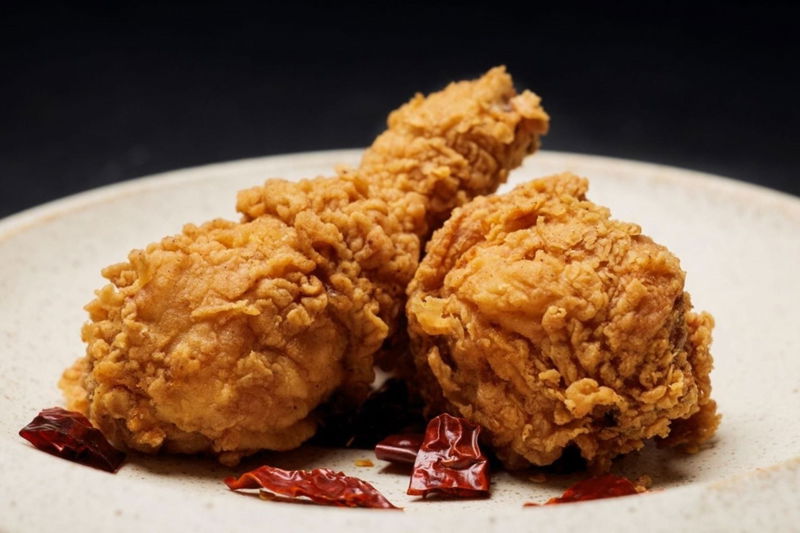
The new management found his gravy recipe too complicated for mass production and simplified it. Sanders told the New York Times the result tasted like wallpaper paste and sludge — not as a colourful aside, but as a formal public position. He took to visiting franchises unannounced and on at least one documented occasion threw substandard food on the floor to make his displeasure legible to the manager. He sued the company. He picketed his own restaurants. He was not, by any reasonable definition, a compliant brand ambassador.
The business passed through several sets of corporate hands — Heublein, RJR Nabisco, PepsiCo, eventually Yum! Brands — each of which wanted the image of the Colonel without the inconvenience of the actual Colonel. Sanders remained on salary as a roving ambassador, which meant he was paid to travel the world insulting the product.
What Came After
Sanders died in 1980, aged 90, and the sanitisation accelerated the moment he was no longer around to object. In 1999, a dancing animated Colonel voiced by Randy Quaid appeared in a campaign selling Pokémon beanbags. The company had already changed its name to KFC, at one point floating the suggestion that the initials now stood for "Kitchen Fresh Chicken" — a rebranding so transparently desperate it speaks for itself.
Most extraordinarily, the company released marketing materials advising customers to remove the skin from their chicken before eating — effectively encouraging people to peel away the eleven herbs and spices that the entire enterprise was built upon. It is difficult to imagine a more complete symbolic betrayal of a founder's life work.
The Ghost in the Bucket
Sanders achieved something genuinely rare: he pulled himself from deep rural poverty to global, enduring recognition, and he did it on his own ferociously idiosyncratic terms. A man who shot a business rival, delivered babies, fed atomic scientists, and built a franchise empire from the back seat of a car at an age when most people have long since stopped trying.
The cost of that recognition was his reality. The corporations that inherited his image needed something frictionless and friendly, and Harland Sanders was neither of those things on his best day. So they kept the suit and the smile and quietly retired everything else — the violence, the fury, the perfectionism, the pantless heroics, the magnificent, unreasonable refusal to accept defeat.
The ghost moves considerably more merchandise than the man would have. But the man, with his hawg rifle and his arthritis and his nickel-a-bird handshake deals struck in diners across America, was a great deal better company.
Comments
No comments yet. Be the first to comment!